Showing posts with label Lisa Brackmann. Show all posts

Thursday, July 4, 2013

HOUR OF THE RAT-The Flawed Protagonist

Hi, Kat Sheridan hosting today so Sia can have a well-deserved long holiday weekend off for the Fourth of July!

I have a confession to make. I drink bourbon (and coffee), occasionally to excess. I can out-swear a Marine drill sergeant. I get pig-headed about the dumbest things. Sometimes I make bad decisions, do stupid stuff, or trust the wrong person. I try to do my best, and just hope my successes balance my failures. In other words, I’m human.

Which means I’m also a lot like Ellie Cooper, the protagonist in Hour of the Rat, the latest novel by Lisa Brackmann. I first encountered Ellie in Ms. Brackmann’s debut novel, Rock Paper Tiger. In Hour of the Rat, Ellie once again drags me along on an adventure through sprawling, bewildering, beautiful and treacherous China as she tries to help an old war buddy locate his missing brother, while being chased, used, and abused by shadowy government agencies, and stumbles into a truly terrifying real-world plot line having to do with GMOs (genetically modified organisms—if you want to get the willies every time you eat, look them up).

I’m going to say right up front that I loved this book. The synopsis is at the end, so I won’t repeat it here. What I want to talk about today is Ellie Cooper, and the way too many people may view a protagonist like her.

Let me tell you about Ellie. She was a medic in Iraq, a soldier who got caught in a terrible Abu Ghraib-like situation, and got torn between duty and horror. Her husband left her for a younger model. She got blown up and lost a chunk of muscle in her leg. It causes her deep physical pain and always will. She’s tough as old leather, but feminine enough to be embarrassed about the scars on her leg. She has PTSD. Between the pain and the nightmares, she doesn't always sleep well. She can’t function in the morning without coffee, her beverage choice the rest of the day is often beer, and though she tries to endure the constant physical and emotional pain, she sometimes resorts to popping Percocet for relief. She has a wry, dry, self deprecating sense of humor that comes out sometimes at the worst possible moment. She loves her uber-Christian mother, who drives her crazy, and is trying to heal past rifts with her. She’s an expat living in China, she’s trying to be a good friend to folks who may not deserve it, she’s trying to get her act together, and she’s trying to find some meaning in a world that exploded and spun out of control on her.

I haven’t read the reviews on Hour of the Rat yet, but I read them for Rock Paper Tiger (because I like to see what other people think of a book I adored). I was seriously appalled by folks who took issue with Ellie’s drinking and swearing and flawed decisions. As if they expected her, as a soldier, to say “gosh darn” and return home after the war to bake cookies and join the PTA. This weekend Americans celebrate our freedom, and the men who fought and died for it. Now that women are actively being allowed in combat positions (as if they already weren't de facto in those positions), are we ready for our books to have protagonists like Ellie Cooper?

My question is this: If Ellie Cooper had been Elliot Cooper, a male protagonist, would readers feel the same? Would you, as a reader, be more tolerant of a male character who’d been a soldier, been hit by an IED, who suffered the hell of PTSD, who swore, who coped with too much beer and painkillers, ran into dangerous situations, and was ambivalent about his mother?

Is there a subconscious prejudice toward the realistic portrayal of flawed female protagonists?


Hour of the Rat by Lisa Brackmann


Iraq War vet Ellie McEnroe has a pretty good life in Beijing, representing the work of controversial dissident Chinese artist Zhang Jianli. Even though Zhang's mysterious disappearance of over a year ago has attracted the attention of the Chinese authorities. Even though her Born-Again mother has come for a visit and shows no signs of leaving.

But things really get complicated when Ellie's search for an Army buddy's missing brother entangles her in a conspiracy that may or may not involve a sinister biotech company, eco-terrorists, and art-obsessed Chinese billionaire, and lots of cats—a conspiracy that will take her on a wild chase through some of China's most beautiful and most surreal places.


Guest host Kat Sheridan is an aspiring romance author, fond of bourbon and shiny things. Creator of BlurbCopy.com, writing blurbs/back cover copy for indie authors. Bon vivant and diva. Her debut Victorian gothic romance novel, Echoes in Stone, will be published in the fall of 2013.

Wednesday, May 30, 2012

RETURNING TO THE SCENE OF THE CRIME


MARGARITAS AT SUNSET
My guest is Lisa Brackmann. I'm glad to have her visiting Over Coffee again. If you remember, I interviewed Lisa last year when her debutROCK PAPER TIGER (Year Of The Tiger in the UK)—was released. 
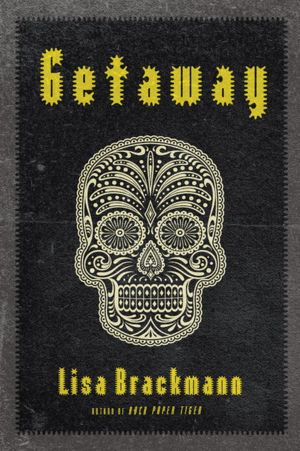
Lisa's second book, GETAWAY (Library Journal Reviews lists it as a must read this summer), has just been released. Lisa is currently down in Puerto Vallarta (hence the margarita above, directly from her to us) attending a book event and will be checking in from Mexico through out the day.  


I’m here in Viejo Vallarta, a few blocks from the beach, close enough to feel the ocean breezes. To my left is a ravine, where several donkeys stomp on the hillside, waiting for their nightly appearance at Ánadale, a bar down the street in La Zona Romántica.

At this point, some of you who read my latest novel, GETAWAY, may be saying, “Waaait a minute. Didn’t you just write a scary book about an American woman who goes on vacation in Puerto Vallarta, and things go very, very wrong? Aren’t there headless bodies on every street corner?”

It is true that there are some very scary stories coming out of Mexico, largely centered on the violence that has exploded since Mexican President Calderón declared war on the drug cartels a few years ago. This war has claimed upwards of 40,000 casualties, and though most of them are involved in the drug trade, journalists, officials and innocent bystanders have also been targeted or caught in the crossfire.

All of that said, it’s important to understand that this violence is largely localized, focused mainly in the border zone or in other areas where different cartel factions vie for control of the market.

Puerto Vallarta is still a safe destination for tourists and a wonderful place to spend your vacation. In fact, every time I visit, I ponder relocating here. I could live in this town. Write on a terrace cooled by ocean breezes. Take a break on Los Muertos Beach. Have a margarita or two.
So, why did I write a book that made the place seem dangerous?

My primary reason was that I am familiar enough with the location that I felt I could do the setting justice. A lot of readers want to be taken to an unfamiliar place and get a sense of what it might be like, and providing that experience is one of the things I most enjoy when I write books.

The other? It’s the job of a suspense author to, well, provide suspense.

This trouble looks pretty 
good to me, especially after a 
Margarita or two...
So, after deciding that I would set a suspense novel here, I had to figure out where the suspense would come from. I had a sort of vision, of an American woman on vacation, sitting on the beach, watching the passing carnival of tourists and locals, drinking beers, selling trinkets and serapes. She was unhappy, I knew that, but I didn’t know why. I wrote the first chapter, and figured that part of it out. Set up the situation that would get her in trouble.

Then, I had to determine what that trouble was.

You work with what’s plausible, or at least with what you can sell as plausible. Involving the drug trade in protagonist Michelle’s problems made sense. But I hope what people will take away from the story is not, “Mexico is scary!” and that the drug trade is a Mexican problem, one that has nothing to do with us in the US. But rather, that the story deals with corruption in general, and on both sides of the border.

A friend of mine who lives here asked, why would setting a crime novel in Puerto Vallarta be any different than say, setting one in Los Angeles? I think it’s a very good question.

Most Americans wouldn’t hesitate to visit Los Angeles, setting of countless crime novels, or New York, or Navaho country, or Oslo, or Beijing, or most of the places where countless authors have created fictional mayhem. In the case of Mexico, it’s true that there are areas you probably want to avoid, but I think that the many stories of drug violence with little to balance them have created a perception that does not match the reality of the country. Yes, the drug war is one reality. One aspect. And it’s a tragedy of epic proportions.

But, life goes on as well. And in most of Mexico, life is peaceful and ordinary.

So, adiós, for now, from Puerto Vallarta! It’s time for me to walk down to the beach, and have a margarita.
~*~*~*~

GETAWAY  Available in stores and online bookstores.

AMAZON, B&N, BAM, POWELLS
Michelle Mason tells herself she’s on vacation. A brief stay in the Mexican resort town of Puerto Vallarta. It’s a chance to figure out her next move after the unexpected death of her banker husband, who’s left behind a scandal and a pile of debt. The trip was already paid for, and it beats crashing in her sister’s spare room. When a good-looking man named Daniel approaches her on the beach, the margaritas have kicked in and she decides: why not?


But the date doesn’t go as either of them planned. An assault on Daniel in her hotel room, switched cell phones and an encounter with a “friend” of Daniel’s named Gary gets Michelle enmeshed in a covert operation involving drug runners, goons, and venture capitalists. Michelle already knows she’s caught in a dangerous trap. But she quickly finds that running is not an option. If she’s not careful, she’ll end up buried in the town dump, with the rest of the trash. Now she needs to fight smart if she wants to survive her vacation. EXCERPT


"Brackmann strikes exactly the right mood in this frantic look at an ordinary woman who can't seem to claw her way out of the mess in which she's managed to land."—Kirkus Reviews


Getaway:  
My Review 

~*~*~*~

Lisa Brackmann has worked as a motion picture executive and an issues researcher in a presidential campaign. A southern California native, she currently lives  in Venice California, with her three cats. Her critically acclaimed debut novel Rock Paper Tiger, was an Amazon best book of 2010.


You can find Lisa: Website, Twitter, Facebook

Monday, May 28, 2012

Kat's Monday Maundering – Toys for the Reader’s Brain

Here's to you Kat! And Thank you.


First of all, no, I’m not Sia. Sia has kindly allowed me to hijack borrow her blog while she takes a well-deserved rest and enjoys the long weekend. With any luck, she’s sitting by a pool with an iced coffee (or other adult beverage!).

Today’s blog topic was prompted by reviews I read on a book I loved, by people kvetching remarking they were unhappy with what they viewed as an unresolved, ambiguous ending. To them, I want to say pffft have you never watched Gone With the Wind? Shane? Read pretty much any literary novels?

I remember seeing Gone With the Wind for the first time when I was 15, as part of a class assignment. Rhett delivers his lovely line and slams the door. Scarlett cries and says she’ll think about things tomorrow. Fade to black. Lights up. I remember standing and yelling “I sat through four hours of boring war scenes and two intermissions for this??? This non-ending?? This…this…” At that point I became pretty much incoherent.

Many years later I watched it again. And discovered that I loved the ending. I loved discussing and debating it with friends. Did Scarlett chase after Rhett? Chase after someone else? Learn her lesson and become a nicer person (pffft!) Margaret Mitchell didn’t spell it out for us because she trusted us, as readers, to be discerning enough to figure it out ourselves. She didn’t need to wrap a pretty bow around it and deliver it on a silver platter. When asked, Mitchell herself said she did not know and said, "For all I know, Rhett may have found someone else who was less difficult."

The movie Shane ends much the same. The hero kills the villain and saves the town, but is wounded in the process. He gets on his horse and rides away into the sunset. Does he die? Find a doctor? Go on to save some other town? Marry Miss Kitty (oops, wrong Western). The thing is, we don’t need to know. The ending is satisfying just as it is, and the discussion/debate around it is even more entertaining.

So long as an author ties up all the major plot points, vanquishes evil (at least temporarily), and has cemented a memorable protagonist in my mind, I’m satisfied. Does the hero live to fight another day? Does the heroine look toward the future—no matter what it may hold—as a changed (or not!) person? I’m good with that.

I look at ambiguous/open/temporarily resolved endings this way: Let’s say on Christmas morning, you are given two presents. The first is all tied up with silvery wrapping paper and tied up with a pretty bow. Inside you find a doll house—the walls are decorated, it’s filled with tiny furniture, and comes with a little doll family all ready to move in.

The other package isn’t nearly as pretty—it’s kind of lumpy and unwieldy and has sharp corners poking out. When you unwrap it, you discover a pile of Legos. OK, so you can make your own doll house with them. Or you could build a skyscraper. Or a rocket. Or a pirate ship. They can be just as entertaining as that pretty ready-to-go gift, but some assembly is required. You’ll need to think. You’ll need to use your imagination.

But Legos—that daunting pile-o-stuff—comes with the best thing of all: possibilities. They can become whatever you want.

And so it is with books that have those open, ambiguous endings. When I read books like that I thank the author for respecting my intelligence, for trusting that I will discern their meaning, and for gifting me with whatever possible ending I can imagine for the characters.

***SPOILER ALERT***

If you’re up for a “flying off into the sunset” kind of ending, one that manages to combine BOTH a wounded hero AND a woman trying to figure out the next step in her life, I highly recommend the newest thriller from Lisa Brackmann, Getaway. Lisa herself will be here to talk with you on Wednesday, but I love her work so much, I wanted to recommend it ahead of time!

  • So tell me: do you like your endings wrapped up with a pretty bow, or do you walk on the wild side and play with Legos?


Kat Sheridan is a recovering project manager and business analyst whose hard-bitten persona has always hidden a secret romantic. She likes her stories with a dark and dangerous flavor, so long as—in the end—the villains are vanquished and true love triumphs. She is inordinately fond of glitter nail polish, shiny things, bourbon, and any comestibles on which frosting can be placed.

Kat splits her time these days between the Midwest in the summer and the South in the winter because she dislikes snow, driving on ice, and wearing shoes (except for flip-flops, preferably with rhinestones). Her peripatetic life is shared with her own real life hero who shows her every day what happily ever after means.

Friday, April 6, 2012

GETAWAY

Tropical beaches, too many margaritas, add a sexy tempting stranger, and you have an engrossing tale filled with excitement and danger.

Getaway

Lisa Brackmann
Hardcover, 320 pages
Soho Press
May 1, 2012
5 Stars

WELCOME to gorgeous Puerto Vallarta, Mexico—home of margaritas, sunset beaches, a shady American ex-pat community, and a barely-hidden drug syndicate. This will be the most dangerous vacation of Michelle’s life.

Michelle Mason just came to the resort town of Puerto Vallarta for a short vacation. When good-looking man named Daniel approaches her on the beach, the margaritas kick in and she decides: why not? But the date doesn’t as either of them planned. A break-in in her hotel room, switched cell phones and an encounter with a friend of Daniel’s named Gary get Michelle enmeshed in a covert operation involving drug runners, goons, and venture capitalist, Michelle knows she’s caught in a dangerous trap, and quickly finds that running in not an option. If she’s not careful she’ll end up buried in the town dump, with the rest of the trash. Now she needs to fight smart if she wants to survive her vacation.

My thoughts:  I have been looking forward to reading this book since I first heard about the setting and premise. Getaway didn't disappoint me. It's well written and all too believable. I can actually see where this situation could happen. Getaway was so good it kept me turning the pages and I finished it in one day. If you like thrillers with a plausible setting, realistic characters, and danger, then this is the book to read this summer.
Ms. Brackmann has a knack of creating characters that have faced trauma in their lives and as a result have become somewhat indifferent or ambivalent; and placing them in situations that forces them to pull on inner reserves and strengths to deal with it. 
Case in point, Michelle Mason. Recently widowed, Michelle is facing, thanks to her dearly departed husband, social scandal and financial ruin—the end of the life she has become accustomed to. Puerto Vallarta was supposed to be a vacation and a time to reflect upon what she was going to do with the rest of her life. Instead, like Alice in Wonderland, she gets dropped down the rabbit hole into a world where nothing is what it seems to be. Drug wars, the DEA, and where good guys aren’t always good and trusting the wrong people can get you killed. Michelle’s journey pulls her out of her apathy and into fighting for survival against the odds where she can’t trust anyone but herself. 
What follows is an edge of your seat, believable, tightly woven story of suspense and danger played out in the steamy underbelly of Mexico—where winning means you live.

Lisa Brackmann has worked as a motion picture executive and an issues researcher in a presidential campaign. A southern California native, she currently lives  in Venice California, with her three cats. Her critically acclaimed debut novel Rock Paper Tiger, was an Amazon best book of 2010.


You can find Lisa: Website, Twitter, Facebook

Wednesday, January 26, 2011

San Diego Noir: Interview with Lisa Brackmann

I’ve mentioned before I’m part of a large writing group and we have quite a few published authors covering multiple genres from literary to horror. We have some outstanding writers. I’m very proud of our group and the hard work our authors and editors do. We’ve been together about five years now and I talk to most of them on a daily basis. I’ve learned so much from them because we tend to share current publishing trends, news, and a plethora of information on writing.

Available for pre order
It’s also fun to keep track of some of their projects and how they get them. Lisa Brackmann recently participated in an anthology for a New York publisher, Akashic Books. Who, you ask? I hadn’t heard about them either. However, if you’re a mystery writer/reader you probably know of them. If you enjoy Noir stories you may have read some of their books. They have quite an impressive line up of authors.

They publish an award winning Book Noir Series centered in various cities around the world. I had heard of Brooklyn Noir but didn’t know the publisher—which is not unusual for me, as I tend to remember book titles or authors better than I do their publishers.

Akashic says of the series, “Following the stunning success of the summer '04 award-winning bestseller Brooklyn Noir, Akashic Books launches a groundbreaking series of original noir anthologies. Each book is comprised of all-new stories, each one set in a distinct neighborhood or location within the city of the book. ”

To date, they’ve published 42 books in the Book Noir Series and there are 12 more planned with 4 being released in 2011.

Being the curious type, I asked Lisa about her participation in the Book Noir Series.


Lisa, you debuted with Rock Paper Tiger in 2010. ROCK PAPER TIGER made Amazon’s Top 100 Books of 2010 (that’s fiction and non-fiction) and is one of Amazon’s Top 10 Mysteries & Thrillers. Still, you’re a debut author and it has to feel somewhat surreal to be involved with an anthology like this. How did it happen?

It happened thanks to editor Maryelizabeth Hart.  In addition to her own writing and reviewing, she’s the co-owner of Mysterious Galaxy, a truly wonderful independent bookstore in San Diego.

I did an event there for the release of my debut novel, ROCK PAPER TIGER and had a fantastic time. Maryelizabeth knew that I had a San Diego connection — I’m actually a San Diego native and was born and raised there — and wanted to know if I’d be interested in contributing. She’s really assembled an excellent, eclectic lineup, including such luminaries as T. Jefferson Parker and Don Winslow, and I was honored to be asked. And a little worried that I wouldn’t be able to deliver — I hadn’t written a short story since college!

Were you assigned a theme to write to?

In addition to putting together a diverse slate of authors, Maryelizabeth also wanted a collection of stories that do justice to the diversity and complexity that is the city of San Diego — it’s not all surfers and beaches. So though I wasn’t assigned any sort of topic or location, I wanted to make sure I didn’t just do another day at the beach.

Of course, what ended up happening is that the bulk of my story is set in Ocean Beach! But I also go to the World Famous San Diego Zoo.


What kind of research did you have to do?

I was getting pretty close to the deadline and quite honestly didn’t have a clue what I was going to write about. I really didn’t know if I’d be able to come up with a story or not. I decided to give it my best shot and proceed with the research and hope that it inspired something.


Now that would add some pressure to a writer. But still, you grew up in San Diego so couldn’t you just create a story from your memories?

Though I’m from San Diego, I’ve lived up in Venice CA for a number of years. So my first order of business was to visit the locations I wanted to use. I went first to the San Diego Zoo. I’d worked there for a number of years – it was my summer and weekend job that basically put me through college — but it had changed so much that I knew I needed to go there if I wanted to do it right. I’m very much a writer who works off of a place—I’m inspired by settings and I like to bring them to life with little, visceral details.

I had a fantastic trip there. I was particularly fascinated by the new elephant mesa, which also features many local animals as well as a natural history lesson on extinct species and environmental challenges.

So now you had a clear vision of the setting?

But I still didn’t know what I wanted to use the setting for.

Yikes. How did you get your story?

 
I’d read an article about the same time about a sticker that was for sale in Ocean Beach, reflecting tensions between the local residents and a population of transients that many saw as a more dangerous element than the long-time hippies in VW vans that the area is known for. The sticker is a parody of signs at the San Diego Zoo. It says, “Please Don’t Feed Our Bums.” For whatever reason, that inspired me. And since the theme of this series is “noir,” that suggested a few other things. “Noir” to me means “A woman does a man wrong,” or conversely, “A man does a woman wrong.” So I put all those elements together, and voila, a story emerged!

When will it be out?

SAN DIEGO NOIR from Akashic Books will be out June 1st – just in time for beach reading!

Meanwhile you had also been finishing up your latest full-length novel. When will your new book out and can you tell us a little about it?

I’ve completed my second novel and hope to have more news about that soon. It’s another “existential thriller,” as I like to call ‘em, set in Puerto Vallarta, Mexico, featuring another woman who accidentally gets in way over her head. Michelle is a different sort of woman from Ellie (the protagonist of ROCK PAPER TIGER). She’s fortyish, a recent widow, and somewhat of a social chameleon; she’s pretty confident and savvy. But she’s nowhere near equipped to deal with the trouble she gets into.


I’ve been eagerly awaiting this one. As soon as you have a release date I want to have you visit again. Thank you for sharing the information on your upcoming anthology, San Diego Noir to be released in June. I’m looking forward to that one too.

~*~*~*~

Lisa Brackmann has worked as an executive at a major motion picture studio, an issues researcher in a presidential campaign, and the singer/songwriter/bassist in an LA rock band. She still takes pride in her karaoke-ready repertoire of bad pop hits and an embarrassing number of show tunes. A southern California native, she lives in Venice CA and spends a lot of time in Beijing, China. Her three cats wish she’d stay put.

Blog: Papertigertail

Friday, June 11, 2010

Interview With Lisa Brackmann, ROCK PAPER TIGER

My guest Lisa Brackmann, author of a outstanding debut novel, entitled ROCK PAPER TIGER. I had the chance to read her book several weeks ago and loved it. Read my review here.

Iraq vet Ellie McEnroe is down and out in China, trying to lose herself in the alien worlds of performance artists and online gamers. When a chance encounter with a Uighur fugitive drops her down a rabbit hole of conspiracies, Ellie must decide who to trust among the artists, dealers, collectors and operatives claiming to be on her side – in particular, a mysterious organization operating within a popular online game.

I had a chance to chat with Lisa about her life, her trips to China, her book, and what's coming next from the pen of Lisa Brackmann. She's led a rather fascinating life.


Lisa, welcome to Over Coffee.

You’re a Californian by birth and live in Venice Beach area. You’ve had quite a few gigs in your life—singer/songwriter/bassist in an LA rock band, written screenplays :-), worked in a movie studio for quite a few years. I'd say you were pretty heavily involved in the art of entertaining people. How did that come about?

I’d always been passionate about creative writing, and after my freshman year of college, decided that I wanted to pursue a career in film and television. I felt that film and TV were the art forms that could reach the most people, and I’ve always had a bit of a didactic streak – to me, art is about entertainment, but it’s also about enlightenment.

I noticed a thread of that in your book. How in the world did you go from being passionate about writing to starting a rock band?

During my time in China (more about that below) I got the idea that I wanted to play rock music. When I came home to San Diego, I taught myself the bass and formed a band that helped pay for my textbooks in college. After I got done with school, I moved up to Los Angeles to pursue both of these interests. I had a band that lasted more than a decade. We played around town, got some nice reviews here and there, but never could quite crack that next level of success.

You certainly have drive and ambition so why do you think it never reached “that next level of success”?

I think in part because I always had an ambivalent relationship to performing, and in part because my attention was always divided – I was writing screenplays and teleplays at the time as well. I never had much success with those either, mainly because the stuff I wrote tended to be a little too out there to have much of a chance at being produced.


And oh yeah, there was this need for a day job.

Yeah, eating and having a roof over your head is always nice. Hence, going to work for a studio? What exactly does an executive at a major motion picture studio do?

After kicking around doing various things I ended up at the film studio in a pretty low level job, doing an esoteric form of legal research. I worked my way up to an executive director level, working in a more creative capacity, primarily for film/TV development and production. I like to say that I was a mid-level studio bureaucrat, but for book jacket purposes, “executive” is more or less accurate.

What does Lisa Brackmann like to do for fun?

I enjoy getting together with friends – I have good buddies who come over and we taste wine and watch DVDs – we went through the entire run of “Buffy the Vampire Slayer,” so we still call these evenings “Buffy Nights.” I like going to art events, to interesting cultural activities. I love to travel – I pretty much like seeing what’s out there in the world. I’m drawn to intense experiences, though more as an observer than a participant (I probably should have gone into journalism). Of course I love reading, and I really do like long walks on the beach. But not piña coladas.

You say, “Accidentally went to China in 1979. Never quite left.” How did you accidentally go to China?

I had a high school friend whose parents were in the first group of Americans to teach English in China since before the revolution. My friend asked me if I wanted to go with him to visit his parents. This seemed like a good idea at the time. We were supposed to stay for a few weeks but ended up staying six months.

I would imagine money would run out after being in China six months. How did you support yourself while there?

I taught a quarter of conversational English to college students older than I was, who had had their educations interrupted by stints out in the countryside due to the Cultural Revolution. We also traveled around the country for a month, mostly on our own, which at that time was pretty hard to do. Generally you traveled in tour groups with minders. We always tried to push that particular envelope, to see the “real” China rather than what the government wanted us to see.

What changes, if any, came from that experience?

I think when you have a very intense experience at a young age; it has a profound impact on your personality and actually shapes who you become as an adult. China at that time was particularly intense. We were there shortly after the Cultural Revolution, so it was the scene people sometimes still picture when they think about China – everyone in green and blue Mao suits, lives rigidly monitored and controlled. I went there with little knowledge and few preconceived notions about what China would be like, so I didn’t really experience culture shock all that much when I was there. I did experience it when I went home, in part because it changed me so much, but the environment I returned to had not changed. It was really jarring, and I don’t exaggerate when I say that it completely altered the course of my life.

For example?

I look at things I wrote before and after China and it’s like they were written by different people. I think this is reflected somewhat in my novels, which tend to feature main characters who almost by accident find themselves in situations for which they were unprepared and which completely change their lives.

China is an unusual setting for novels today. What fascinates you about China?

It’s really hard not to descend into cliché when talking about China in general terms, which is probably why I prefer illustration by anecdote or in fiction. But the contrasts are just so fascinating – the turbo-charged pace of modernization on the one hand and thousand year old traditions on the other—temples across the street from Starbucks.

What keeps drawing you back?

On a personal level, I feel as though in a way I return to China to examine my own life – returning to the scene of the crime as it were, in an attempt to understand how China affected me. I feel very comfortable there, so it’s like being in my second home. I have a great network of friends whose company I really enjoy.

I also just really dig speaking Mandarin. It makes me happy.

I thought it interesting the way you describe modern apartment buildings but parts of it are either not fixed or half built. This description is set in Beijing, which is suppose to be a *modern* city. Do you see a lot of this? Or is it only in certain parts of town? Or was it made up?

Beijing is quite modern overall, and things like the subway system are truly impressive (would that we had its equal here in Los Angeles!). But there is a lot of substandard construction, because a fact of life in China is that regulations on the books are frequently not enforced in reality.


Also, I find there’s a sort of weak sense of public, common spaces – why put any effort into an area that isn’t “yours,” where you don’t actually live? You also have to factor in the amount of over-building that’s gone on [in China]. This is due in part to the tremendous corruption and collusion between local governments and developers, and in part due to government policy – China depends on an 8 to 9% annual growth rate to keep unemployment at a level that prevents widespread unrest, and with export demand down, that means infrastructure projects that aren’t necessarily well-thought out or needed.

I have to ask, are there online games in China like you portray in the book?

I based the game in the book, “The Sword of Ill Repute,” on World of Warcraft, which is incredibly popular in China. Like a lot of other popular entertainment, the government isn’t quite sure what to do about it or how to regulate it. Gaming is a big part of youth culture; a form of escapism and a means of individual expression that I think is probably more vital there than it is here in the US.

Gaming is big with the youth of most countries; what makes it different in China?

There actually have been protests within online games, like the one portrayed in the book. And recently, a gamer made a funny and pointed satire about the government’s attempt to censor World of Warcraft that was done entirely with animations from the game. I wish my Chinese was better, but I can still appreciate the effort that went into it and the critique it represents.

You mentioned in an interview one of the inspirations for the book was the war in Iraq and something you heard an Iraq veteran say? Care to tell us about that?

I was fascinated/appalled by the Abu Ghraib scandal, which to me was a complete betrayal of our Constitution and the most fundamental principles of our government. The only people convicted for the prisoner abuses were low-ranking soldiers, and given that they were following directives from the highest levels of government, I think this is a real miscarriage of justice. One of these soldiers, a sergeant, once said in an interview, and I’m paraphrasing here, “I’m a good Christian. I teach Sunday School. But a part of me likes making grown men piss themselves in fear.” I thought there was something really profound and interesting about this seeming contradiction.

And thus we have Trey Cooper, yes?

I don’t see Trey as a bad person. He doesn’t have a sadistic streak like the sergeant mentioned above. He really wants to do the right thing, to be a good man. But he’s not a terribly strong person when it comes to resisting authority – and when it comes right down to it, most people aren’t.

No, they aren’t and especially in war situations. It's all considered justifiable.

Most people do what they are told to do; they try to find some way of rationalizing behavior that is contrary to their own best natures.

That’s very true and yet it happens time and time again.
Your main character, Ellie, tells the story in first person which I find puts the reader right there with her. What do you like about Ellie?

Ellie isn’t the toughest person or the smartest person or the bravest person, but she has a fundamental sense of what’s right and what’s wrong, and in spite of her own flaws and fears, she keeps going. She’s in a situation that’s way over her head, at the mercy of forces that are far more powerful than she could hope to defeat, but she doesn’t quit, and ultimately she holds true to her own hard-fought and won values.


Do you have a favorite scene in the book?


Not really. I mean, it’s weird to say this, but a lot of times the most disturbing scenes are the ones that are kind of the most fun to write! Except that they’re also disturbing to me as a writer. Like, “eyewww, where did that come from?” But I also enjoyed writing the humor that’s threaded throughout the book. It may not sound like it from all the stuff I’ve said above, but I think Rock Paper Tiger is a pretty funny book in a lot of places.

Yes, I enjoyed the humor—its dry but there. Many times just her reaction to things made me laugh.

I noticed in the acknowledgements you mention a couple of groups. As a writer, what benefit are groups such as the two you mention?

It really varies. At the most basic level, writers support other writers – we’re the only ones who really understand what we go through, and it’s nice having a forum and a sympathetic audience where you can share and vent and just sort of socialize. It’s a cliché to say it but it’s true – writing is a solitary activity, and having an online home where you can go take a break and hang out is really nice. I also count on my writer friends to give me beta reads and to fill in my own gaps about how the industry works – I can’t begin to tell you how much amazing information I got from our own Judi Fennell, who is a consummate professional.

Oh, absolutely. I’ve learn much from her as well in so far as applying marketing/promotion principles to writing and building a readership—not to mention her ability to get her name out there.

What’s next for Lisa Brackmann?

I’m working on a book that’s set in Mexico – about the intersection of drug cartels, political power and another woman who’s in over her head. After that, I plan on returning to China. I have a good start on a story that I’m excited about. Besides, my Mandarin is really rusty – I need to get back!

I'm looking forward to reading it, Lisa. Thank you for being with us today and I know right now you're heavily involved in promoting your book and building a readership, but I do appreciate you taking time out of your schedule to answer my questions.

Folks, be sure to check out ROCK PAPER TIGER. If you like thrillers and entertainment that enlightens, you thoroughly enjoy the story!


Lisa Brackmann has worked as an executive at a major motion picture studio, an issues researcher in a presidential campaign, and the singer/songwriter/bassist in an LA rock band. She still takes pride in her karaoke-ready repertoire of bad pop hits and an embarrassing number of show tunes. A southern California native, she lives in Venice CA and spends a lot of time in Beijing, China. Her three cats wish she’d stay put.


Lisa's Blog
Lisa's Website


This is Ghost, Lisa's cat. Of course, she thinks she's much better than a tiger any day!


Wednesday, March 24, 2010

WRITING IS A JOB

My guest is Lisa Brackmann. Her Debut book will be available June, 2010, from Soho Press. Be on the lookout, I will be reviewing this book for the blog soon.


Lisa is a friend and she's like the fifth friend of mine that received a contract this past year. It's been quite an eye opener to watch all the work that Lisa and other friends have had to do after they've sold the book. I hear about it from them all in varying degrees.


Why do I say that? Simple. Most writers are focused exclusively on the work involved in writing the story, editing and polishing the manuscript. Then they embark on the querying process and creating the right query letter. Looking for an agent and publisher. Granted, there is a lot of work involved in this part of the process. Somehow, you get the idea this is the brunt of the work. Once you sell, it's just a matter of waiting for the book to be released. Oh so wrong.


One of the benefits of having friends selling their books is seeing another aspect of work involved and just as hard, but in a different way, as the creating and selling it that book. Wow. If you think it's easy street after the sale, think again. It's a lot of hard work.


Lisa explains what it's been like for her.


A few years ago, back when I first seriously started writing novels, I came across Stephen Pressman’s book “The War of Art.” Pressman talks a lot about overcoming resistance and facing your creative fears, but for me what really resonated was one simple principle: writing is a job. The first rule of a job is, you show up. Whether you feel like it or not.

For whatever reason, viewing my writing this way was a huge breakthrough for me. It wasn’t about waiting for a Muse, or having to be in the mood. It was about putting my butt in the chair, opening up the document and doing the work. Discipline alone could nourish talent and inspiration. I liked that.

Seeing my writing as a job to do, while perhaps not the most glamorous or inspirational perspective, certainly has come in handy on the road to publication.

Last summer, my novel,
ROCK PAPER TIGER , was acquired by Soho Press , for Spring/Summer 2010 publication. That is actually a pretty fast turnaround in the publishing world, and it meant that I had a lot of things to do in a fairly short amount of time, with lots of deadlines.

Acquisition and publication processes vary greatly from house to house, so some of my experiences may not apply to every situation. But I hope to give you a sense of what your job, as an author will be like, once you score that publishing deal and have signed your shiny new contract.

Generally you will have editorial revisions, requests for changes concerning story and character. Sometimes these come in the form of an editorial letter, where the concerns and suggestions are outlined. Without going too much into the specifics of my experience, I’ll just say that my editor was awesome and this was not a huge deal for me (for which I am seriously thankful).

At the same time, you’ll have to deal with a number of “housekeeping” issues – things that have to be done that are not directly connected to writing and revising.

The wonderful publicist at Soho (excuse me if I run out of superlatives, but everyone I have dealt with there has been fantastic) told me the single most important thing an author can do in terms of publicity is to have an easily findable web presence. That means a website that comes up when people search your name and the name of your book(s). So, mine is
lisabrackmann.com , and in addition, Rock Paper Tiger permanently redirects to the page about the novel on my website (try it! You’ll see!).

Unless you are a web/graphic designer or someone with a lot of talent for design, I strongly recommend that you bite the bullet and hire a pro to design your site. Yes, it costs some money. But you’re going to need tax write-offs anyway, and a professional-looking website signals that you are a professional author. Which, once you sign a contract, you are.

Show the world that you’re a pro. It’s worth it.

Likewise…you’ll have to get an author photo. Yes, you really will. Even if, like me, you are a fairly publicity-shy sort of person. It Must Be Done.

Again, while you may not need to hire a professional photographer (I did, and I’m glad), your photo needs to have a certain amount of polish – in other words, a good portrait, not a casual shot of you and the kids and the dogs and/or cats. Think about your genre too. What sort of “look” helps promote what you are writing?

You will need a short bio.

While I was never asked to write a synopsis (and for that I am extremely grateful!), at many houses, you will be. I definitely have needed blurbs – thankfully I’ve been generally been able to use variations on my original query.

You might be asked to fill out an author survey. Again, this varies a lot from house to house. The purpose of the survey is to identify potential markets for your book and to provide information that will help Publicity and Marketing sell it. Any authors you can compare your work to, whose readers might like yours? What are the most original features of your book? Who might you be able to enlist to review or publicize it? Are there conventions or conferences that might be relevant? In what cities do you have particularly good networks?

You may be asked for a list of authors who would be appropriate to blurb your work, including authors you might actually know and can personally ask.

I found the Author Survey to be one of the toughest things I did. It forced me to think of my book in ways that don’t come naturally to me (I’m notorious for writing stuff that doesn’t quite fit neatly into genre categories).

Meanwhile, what about that book you wrote? You did your editorial revisions, the MS has been officially “delivered and accepted” (which you love, because that means you get Part 2 of your advance!). So you’re done, right?

Uh, no.

Here’s another instance where different houses have different processes. In my case, I next worked on a line edit. This involved minor editorial changes (clarifications, fact checks, fixing awkward prose) and copy edits. After that, the copy editor did another pass.

Then come the galley proofs.

This is kind of exciting, because the “galleys” are the typeset version of your book – what your book will look like when it’s published. But it’s also a challenge, at least for me – by this point, I had read the book so many times, I worried about my ability to catch mistakes. I strongly recommend that you come up with a careful system of checks and double-checks, because this really is your last chance to fix problems and make small adjustments in the text.

(Well, sort of. In my case, a proof-reader did an additional pass and had a few questions, plus I had a little issue that I just had to address. Again, procedures differ; your mileage may vary!)

Finally, your book is off to Production. Does that mean you’re done?

Well, I’m not.

I’m just a little over two months away from my publication date. I’ve had letters and essays to write for various promotional efforts. Bookstore events to calendar (and I guess I’d better start thinking about what I actually might say when I get there!). Interviews to conduct, conventions to attend, blog posts to write. Like this one!

So, yes. Being a professional author is a lot of work. It’s a job. And like any job, there are deadlines, and tasks that are kind of a pain in the butt.


But you know what? It’s the best job I’ve ever had.


ROCK PAPER TIGER:

Iraq vet Ellie McEnroe is down and out in China, trying to lose herself in the alien worlds of performance artists and online gamers. When a chance encounter with a Uighur fugitive drops her down a rabbit hole of conspiracies, Ellie must decide who to trust among the artists, dealers, collectors and operatives claiming to be on her side – in particular, a mysterious organization operating within a popular online game.


“Few writers would be up to the challenge of blending the worlds of urban China , Iraq , and a virtual online kingdom–but Lisa Brackmann wildly succeeds. Prepare to taste the smog, smell the noodles, and rub the Beijing dust between your fingers. Rock Paper Tiger is a fresh and vigorous work that vividly captures the roller coaster that is life in modern China .” –Eliot Pattison, THE SKULL MANTRA

~*~*~*~*~


Lisa Brackmann has worked as an executive at a major motion picture studio, an issues researcher in a presidential campaign, and the singer/songwriter/bassist in an LA rock band. She still takes pride in her karaoke-ready repertoire of bad pop hits and an embarrassing number of show tunes. A southern California native, she lives in Venice CA and spends a lot of time in Beijing, China. Her three cats wish she’d stay put.

Blog: Papertigertail


Monday, August 24, 2009

A Writer's Journey To Publication

I’m happy to welcome my friend and debut author, Lisa Brackmann, to Over Coffee. We’re part of the famous, or infamous, depending upon your opinion at the time, Writin’ Wombats. I’ve watched many of our group receive contracts for publication, including Lisa.

I know the road to publication isn’t easy. Most writers are so focused on getting published, they rarely think beyond that. What happens when you get an agent? What happens once the book is sold? We think we work hard on our novels prior to publication, but what about after?

Lisa shares a bit of her journey to publication with us. Some of this was previously published on her blog, The Paper Tiger. Lisa also agreed to answer some of my questions which you will find at the end of the article.

Writing a novel is a lot of work. Okay, I've known that for a while. I've written a few. This last one, the one that got me an agent and then a deal, took so much time and effort that I'd joke it was written in dog years. And that it was trying to kill me, I was pretty sure. That last bit might not have been a joke.


The part that I'd only previously known on an intellectual level is that getting published is also a lot of work. I mean, this should be obvious, and I sort of knew it, but until I went through it, I didn't actually know it.


All of the sudden, you're getting paid for your work. And people are depending on you. Your agent. Your editor. Your PR person. An entire infrastructure. You've signed a contract, and you have to deliver, quality work, on time. There are hard deadlines. Publication schedules. Catalogs for the upcoming season. I think that's the first time I really absorbed that the whole thing was real, when I downloaded Soho's catalog, read all of the book descriptions, the author bios. Wow, I thought. I'm going to be in one of these. Me and my book. Shit.


There's the book itself. Editorial revisions. Line edits. A galley proof yet to come. And then there's everything else that comes with being an author in the modern world. A bio. Photos. A new website. Marketing ideas. Where am I known? Who do I know? How can I help my own chances of success?


It's that whole notion of thinking of yourself and your work as a product, as a brand. Most of us writer types are introverts, and we can all fulminate against this cultural trend of marketing uber alles (and I have), but this is the reality. It's a part of our job, as authors. And if there's one thing this whole experience has brought home to me, it's that being a published author is a job.


Well, duh, right? And I've taken that sort of workman's approach to my writing in general for the past few years. A writing book I've often recommended to people suffering from creative blocks is Steven Pressfield's The War of Art. It's a little repetitive and has its metaphysical aspects which may or may not be helpful to a lot of people. But one of the basic messages I appreciated very much is, you have to think of your creative work as a job. Meaning, you can't wait around for the Muses to inspire you. Because what's the first rule of a job? You show up. Whether you're inspired or not. Whether you want to or not. Eventually that kind of discipline rewards you with productive output.


It worked for me, anyway. I'm not one of these writers who has to write, who churns out thousands of words at a sitting. It takes a lot of effort for me, a lot of the time. Ultimately I'm happier when I'm writing than when I'm not writing, so I make myself do it, whether I feel like it or not.You can carry over a lot of other things from thinking of your writing as a job.

You have to work with other people. At times you have to put aside your ego and listen to what others have to say about your work and accept their criticism. You have to distinguish between trivialities and the things that really matter to the integrity of your work.

This experience has given me new sympathy for publishers—and agents—and the reluctance they might have to take on debut authors. Though I think if you write a good book, it's pretty clear that you have some discipline, still, there's always that risk that a new novelist isn't going to be able to work to deadline, or work and play well with others, that she might be a big pain in the ass, and not worth the investment of time and money. Because that's the other thing you need to understand, if you don't know this already: agents and publishers are making a significant investment in you, of their own time and potential income.


Me, I take a lot of pride in my craftsmanship, and as I've gone through this process, I've realized that I also take a lot of pride in doing a good job. In getting the work done right, on time, or even ahead of schedule. This is a job that I really enjoy. One where I show up. One that I might even be good at. I like that.


  • How long you've been writing with the view to getting published?

I've always taken my writing really seriously, but it's hard for me to determine when I became serious about being published. Early on I wrote some prose mostly for fun that got me some publishing interest, but I was too embarrassed to follow through with it. For a long time I focused on screenplays and teleplays, but they were pretty idiosyncratic and strange for the most part. Even though I'd tell myself I wanted that career, I wondered about my seeming inability to make the necessary compromises in what I was writing to have it (the one time I did a screenplay project for hire, I really didn't enjoy the process very much).

I then wrote a novel for fun, just as a way to keep my writing chops up, while I focused on that spec screenplay that was going to earn me six figures. I found out that I really liked writing novels way more than spec screenplays, so I kept going with that. I actually had some publishing interest in that book as well, but I always figured it was a serious long-shot (500 pages long! Sort of unclassifiable, semi-steam punk speculative fiction without any elves or dwarves!), and I gave up on subbing that when the editor who had liked it somewhat eventually passed. So ROCK PAPER TIGER was the first novel I wrote where from the beginning I had getting published in mind. And then, of course, the early drafts turned out weird and unclassifiable!


  • How long were you shopping for an agent. Did you get many rejections before Nathan Bransford took you on?

It felt like forever, but it really wasn't that long. I think I had five or six passes before I tried Nathan Bransford of Curtis Brown. But I was already pretty discouraged. The responses I'd gotten from agents (when I got personalized responses) were contradictory, and I was convinced that I'd written yet another unclassifiable, unsalable, weird book.

I only tried Nathan because, when I was about to throw the book in a metaphoric drawer, one of the members of my writing group suggested I try him - "He has a blog, and he likes novels set in foreign countries." I did my research on what he was looking for - something which I strongly urge anyone who is querying agents to do rather than just sending out queries en masse - pounded out a new query letter over a rather large glass of wine, and sent it off.

  • Once you were accepted by him, what did you have to go through to strike the deal?

Nathan felt that my book had a lot of potential but needed some revisions before it was ready for submission. He had a direction in mind and offered to reconsider the MS if I wanted to rewrite along those lines. I agreed with his critique - he really echoed things that I'd suspected but couldn't see as clearly as I needed to do the work on my own. So I did a series of rewrites with feedback from Nathan, who in addition to his agenting savvy is a great editor. By the time we got to a certain point in the process, when it became clear that I could get the book where it needed to be, he offered me representation.

I know that some writers might be wary of doing so much work with no guarantee of a contract at the end, but I think this was a really great way for both of us to test out the author/agent relationship and see how we worked together. Believe me, you want to have a good working relationship with your agent when you go through revisions and then the submission and publication process! And I'm sure that agents feel the same way about the writers they sign. It's a marathon, not a sprint.

  • How did working with an agent change your perspective of publishing?

Working with Nathan and then being signed by him and Curtis Brown was life-changing for me. I do not exaggerate, corny as it sounds. I felt validated for my writing in a way that I hadn't before. Here's someone whose job depends on recognizing talent and whose income depends on making smart choices about who he signs.

For me, long accustomed to writing stuff that was too eccentric to sell, it was a huge confidence booster, and another big step in being able to separate myself from my work, to see it as a product, not some deep reflection of my soul or what have you. That may sound a little crass, but it's absolutely necessary to have that attitude to work as a professional author. You have to learn how to accept criticism without it taking it so personally.

  • I know you love things Chinese. You've been learning the language, you've visited China many times. How much influence has your studies of/love of China influence your writing of Rock Paper Tiger?

Well, most of the book is set in contemporary China. That was a sort of commercial calculation on my part - I knew that people are interested in China, and that not that many American fiction writers have used modern China as a setting. I felt that I had the familiarity to write it with some authority.

China is a fascinating place it's a lot of fun to drop in some of the surreal details that are a part of the daily scenery there. (as an aside, I look for those details in any location I set a book - I'm planning a California road trip novel at some point, and believe me, there's plenty of surrealism here to go around!)

  • Can you tell me a bit about the story itself?

Iraq war vet Ellie Cooper is down and out in Beijing, trying to lose herself in the alien worlds of performance artists and online gamers. When a chance encounter with a Uighur fugitive drops her down a rabbit hole of conspiracies, Ellie must decide whom to trust among the artists, dealers, collectors and operatives claiming to be on her side – in particular, a mysterious organization operating within a popular online game.

  • When will Rock Paper Tiger be released?

June 2010, by Soho Press - who have been an absolute pleasure to work with. My editor, Katie Herman, did an amazing job on my book - and the care they've taken with things like the cover - have I mentioned how much I love the cover? - it's been a great experience. Also one that has really changed my perspective on what being a professional novelist is all about. Which is pretty much the topic of my post!

  • Lisa, thank you for taking the time to answer a few of my questions. I loved your article. It makes sense and gives an insider's view of what happens once you've been sold as well as choices you have to make for your career as a novelist.

I wish you the very best with this book and can't wait until I can read it!

*~*~*~*~
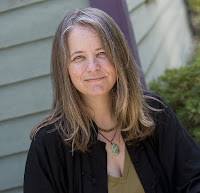
Lisa Brackmann has worked as an executive at a major motion picture studio, an issues researcher in a presidential campaign, and as the singer/songwriter/bassist in an LA rock band. She's lived and traveled extensively in China. A southern California native, Brackmann currently splits her time between Venice, California and Beijing, China.

http://papertigertail.blogspot.com/