Showing posts with label YA. Show all posts

Monday, September 16, 2013

FIUANA LUND—MY WORSE ENEMY

You have to take control of both writer and critic and learn where and when to let each voice emerge.


She’s rude. She has no regard for my feelings—or anybody else’s for that matter. When I see her looking my way, I cringe. I mean, my stomach really curdles. I would
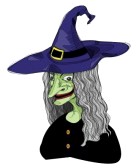
run in the opposite direction if I could.  But there are times when she has me trapped, backed into a corner. Those are the worst times. She’s mean, she’s ugly, she’s got a HUGE rear end—and she hates me. The worst thing about her is that I find myself facing her in the mirror every morning.

I am my own worst enemy, my toughest critic, and the least supportive person in my life where my writing is concerned.

The same can be said for most writers I know. That’s not to say that a part of me isn't still delusional, witlessly hoping to win a Pulitzer prize or earn the title of New York Times Bestseller at some point. But the truth is, when asked about my books or my writing, I struggle to find anything positive to say. In fact, I recently did a radio interview to promote my book. The kind host asked me to talk about Indigo, to get into the book and talk about the story. I opened my mouth and began to blather on and on about a mythology class I took in college. Why did I do that? Why did I practically change the subject instead of sing the praises for a story I poured my heart and soul into, a book I really do like?

I love writing. There are times when imagination matches energy and words spring forth with carefully controlled urgency and I find myself glued to my keyboard, unable and unwilling to pull myself from my constructed world. That’s where the magic is; those moments of writing flow are what we ink slingers live for. But the rest of it? The rest of it is pretty close to agony. In order to sell your work you must be able to sell yourself. How can you sell yourself while there is a battle brewing inside your mind between the writer and the critic? In a word: balance.

Mind over matter, is what my husband says. You have to take control of both writer and critic and learn where and when to let each voice emerge. To be a successful writer, you must cultivate both voices, temper them, and learn where and when each is appropriate. For example, during the creative phase of writing—you know, that point when you've outlined and storyboarded and it’s time to add meat to the bones of your story—that’s when the writer voice needs to emerge loud and strong. That other voice, the one nobody likes to listen to, the critic—well, she needs to shut up. No, like really. Cover her mouth with duct tape and hide her fat butt in a closet. That writer in you needs to be set free without worry or concern.

On the other hand, when it’s time to edit—and I don’t care who you are, you need to edit—tell the writer in you to go take a nap and let the critic out of the closet. Despite all the ugly things I've said about the critic, she’s not all bad.  In fact, in the right setting, she can become one of your greatest allies, allowing you to polish your skills, accept constructive comments, and manage your expectations.

But that’s pretty much where her reign ends. Sooner or later you’re going to have to find the energy and passion to sell your story. That’s when the critic needs to be put away—far, far away. Book her a ticket on a one-way cruise to somewhere icy and cold and perfect for witches like her. Am I right?

The bottom line is this: Believe in yourself. Believe in your talent. Trust your gut, paying attention to both the writer and critic in you. And when you find yourself loathing the critic staring you in the mirror every morning, take a break, take a breath, and then write her out of your next chapter.


  • How do you overcome the blues when you become your own worst critic?
                                                                                                                                                                                      

BUY: AMAZON, B&N, INDIEBOUND
INDIGO
Fiauna Lund


Seventeen-year-old Brit Kavanagh is hiding something: Just before her mother disappeared, she gave Brit faery wings … sewn into her skin.

When her father’s death forces Brit to leave the only home she’s ever known, danger follows her like a shadow. Catastrophe strikes again and again, and at every turn, she is confronted by the terrifying apparition of an otherworldly banshee.

Desperate to unravel the mysteries behind her wings and the curse of the banshee, Brit turns to Gentry O’Neill, a handsome stranger who knows more than he’s telling. With Gentry’s help, Brit pieces together her mother’s troubled past and discovers the horrifying truth of her own existence.

Her mother gave her wings, but she never meant for Brit to fly.


EXCERPT


Fiauna Lund is a grown woman with an overactive imagination, a passion for writing, four children, and the dirty house to prove it.
Reading and writing have always been passions for Fiauna. During her childhood she spent hours exploring the woods of rural western Pennsylvania where she first began creating stories about faeries, pixies, magic, and mystical creatures.
She met her husband, Aaron, while attending Utah State University, and later earned a degree in human services from Columbia College which allowed her to study the uniquely challenged and inspiring people who serve as her collective muse. She now resides in Farmington, Utah. When she's not reading, writing, or running, she spends her time caring for her four adorable children and two curious cats. 
You can find Fiauna:  Facebook, Goodreads, Website/Blog

Friday, September 17, 2010

Where Do You Find the Time?

Fitting Promotion into Your Writing Life


I’d like to welcome, Janice Hardy, to Over Coffee. She is the creator of a fascinating world of Geveg and a young adult fantasy series called The Healing Wars: Shifters (book one) and Blue Fire (book two being released October 5th).


Promotion is a hot topic these days among writers. How do you use time available and make it count and not waste time with ineffectual techniques? How in the world do you balance your life, your writing time (you still need time to create something to promote), and still find time to promote your work? Janice discusses what she’s learned about promotion, including mistakes she’s made.


Chances are, early on in your writing career you’ll think about promotion and cringe. You won’t know what to do, where to go, or how you’ll fit it into your already busy schedule. Googling “book promotion” doesn’t yield nearly the help you were hoping it would.


When I sold my first novel, The Shifter, I knew promoting my book was going to be important, but I didn’t realize it was practically a full-time job by itself. Trying to do it all was impossible, but with so many options available, how did I know which ones would work for me?


I made mistakes. Like not realizing it was considered polite (and encouraged) to comment on the blog of anyone nice enough to mention your book. And spending too much time promoting and not enough time writing. And not realizing that you need to coordinate events with your publisher’s marketing person so you don’t book an event that will cannibalize another.


I was more prepared for my second book, Blue Fire, but it was still a challenge to balance the writing with the promoting. The trick was finding things I could do on a daily (or mostly daily) basis, and making them part of my regular routine. That way, I was always promoting my books and keeping my name out there. I was also making the connections I’d need when I had to do a major promotional push, like a book launch.


When I started thinking about promoting myself, I knew I didn’t want to be one of those folks who’s always shouting “hey, I’ve got a book!” from the rooftops. That didn’t make me want to buy books, and constantly focusing on sales sounded exhausting. I sat down and thought about things that I had seen that did make me look up a book or an author. One thing I noticed, was that I often checked out books that I’d heard about online.


I’m one of those odd people who’s not the least bit shy when it comes to meeting folks, but painfully shy about speaking to large groups (though I am getting better at it now). Connecting to readers online was a great outlet for me, because I got to be social without that “standing in front of people” terror. It also turned promotion into something fun I would enjoy doing and keep up with. I decided to spend my limited time on two online avenues. Blogs and forums.


The Absolute Write forum allows me to be part of a fantastic writer community, and I can answer questions (and ask them when I need to) and help other writers on a schedule that works for me. I get to display my name and book covers, links to my blog and website, and even links to stores that sell my books. Full-time promotion, and I don’t have to do anything but participate in a group I was part of anyway. Checking the forums is a fun break in my day when I need to de-stress.


I love talking about writing, so a blog was a natural for me. With the scheduling features, I can spend one morning a week writing my posts (I post every weekday) and I just check the comments every day. Like the forums, I get to talk with other writers and even build my own writing community. I can talk about my books in a way that offers readers more than just a sales pitch, and use my experiences in writing, querying, and publishing as examples to help others improve their own writing. The blog is always there, so it’s constantly promoting me as well.


Of course, the day to day stuff is only half the job. You still have to keep your website updated (which I’m woefully behind at the moment), and prepare for any upcoming book releases. I’ve found that setting aside one day a week for the larger tasks lets me stay on target and still maintain my writing and work schedules. I can research festivals and conferences I might want to attend, stay in touch with bookstores and schools I’ve visited in the past (and hope to visit again), and find opportunities to reach out to the book community (like this one).


One of the things I enjoy most about being an author is connecting with other writers and readers. Building those relationships is a lot more fun than placing an ad in a newspaper—and a lot more effective. When it comes to promotion, combine it with things you enjoy, and it won’t feel like work at all.

  • How do YOU fit promotion into your writing life?

Blue Fire Blurb:


Part fugitive, part hero, fifteen-year-old Nya is barely staying ahead of the Duke of Baseer’s trackers. Wanted for a crime she didn’t mean to commit, she risks capture to protect every Taker she can find, determined to prevent the Duke from using them in his fiendish experiments. But resolve isn’t enough to protect any of them, and Nya soon realizes that the only way to keep them all out of the Duke’s clutches is to flee Geveg. Unfortunately, the Duke’s best tracker has other ideas.


Nya finds herself trapped in the last place she ever wanted to be, forced to trust the last people she ever thought she could. More is at stake than just the people of Geveg, and the closer she gets to uncovering the Duke’s plan, the more she discovers how critical she is to his victory. To save Geveg, she just might have to save Baseer—if she doesn’t destroy it first.  Excerpt


~ **~**~


Janice Hardy is the author of THE SHIFTER, BOOK I of THE HEALING WARS. BOOK TWO: BLUE FIRE is due out October 5, 2010. She is currently hard at work on book three, thinking up terrible things to do to imaginary people. She lives in Georgia with her husband, three cats and one very nervous freshwater eel. She blogs about writing at The Other Side of the Story (http://storyflip.blogspot.com/). You can also visit her online at http://www.janicehardy.com/

Monday, June 15, 2009

Learning to Embrace Whimsy

Many aspiring authors look for the magic formula to get published. Writers work hard to perfect their craft, keep an eye on the market as to what is selling, and analyze books they read with the view to selling their manuscripts. Then there are the workshops they attend, the writing groups joined and a lot of ‘sit your butt in the chair’ time writing. Instead of collecting the paychecks they envisioned, they have a folder full of rejections. Why?


Multi-published author, Libby Malin, is my guest today. Libby shares her journey from prepublication to published author. She discusses the importance of accepting the publishing business for what it is, not what we
want it to be.


Early in my writing career, in those prepublication days before The Call, I decided to approach commercial novel writing…. logically. By that time, I’d collected a file full of rejections for a couple manuscripts that I had been confident were absolute surefire sales. And yet they didn’t sell. What was wrong? I knew I was a decent writer (maybe not an exceptional one, but surely as good as published novelists on the market). And I believed with every fiber of my being that the novels I’d lovingly crafted were good yarns with believable characters.

Filled with frustration, I decided to approach the problem with scientific precision. After purchasing a few romantic comedies, I sat down with book, pen, and marble notebook, determined to outline them in my quest for the right formula. Although I was interested in writing across several genres, a couple of my rom coms (as they’re called in the biz) had been rejected recently, and by gum I was going to figure out why. Surely taking an analytical approach to publishing would do the trick.

I don’t remember the title of the novel I applied this process to. It was a Harlequin book, by a multi-published author, if I recall correctly. All I remember clearly was writing the chapter numbers on lined pages of the notebook, followed by some bullet points on what happened in each chapter, major plot points, comedic moments, character developments, etc.

And at the end of this exercise, I had….a notebook full of scribbles. I hadn’t learned a thing about what made that novel publishable and mine not so much. If anything, I was even more confused. My manuscripts seemed to me to contain each element I had meticulously outlined, and were every bit as engaging as the one I just read.

After my outlining experiment, the publishing business seemed even more capricious to me, even more arbitrary. I’m a reasonably intelligent woman, and if there was a pattern here, a formula for success, it wasn’t obvious to me.

But of course there is no formula for publishing success. Sure, some books are “formulaic,” stealing the patriarchal church-conspiracy notes from The Davinci Code or the secondary-historical-figure template of The Other Boleyn Girl. But… for every Davinci Code knock-off that sold to an editor, there were probably dozens of comparable quality that didn’t make the cut.

As I said, there is no formula. There is only personal taste.

Sometimes that taste gets filtered through imprint and marketing demands (such as a fiat from the marketing department to buy Davinci Code-like books), but ultimately, an editor buys a book because she (wait for it) loves it. And whether she loves it has everything to do with who she is, whether she’s into punk or classical, likes American Idol or The Tudors, Jane Austen or Charlotte Bronte, or identifies more with Ginger or Mary Ann.

Once an author has achieved a certain level of quality, whether that author’s manuscript gets chosen for publication often has nothing whatsoever to do with the author’s talent or even, sometimes, market pressure. It has to do with what the editor is feeling…about life, as well as about the manuscript you’re submitting at the moment she picks it up to read it.

The moral of the story: if you’re serious about being published, you have to accept this whimsical process, and keep trying, hoping to make that right connection with an editor.

A multi-published author I know recently did an interview with a romance-oriented magazine. In talking about publishing success, she said it really came down to three things – talent, perseverance, and being in the right place at the right time.

I’m convinced my manuscripts in those early days were falling into that third category. Or rather, not falling into it. I was not in the right place at the right time, not hitting the right editor, not hitting her at the right moment.

The business is capricious. That’s all there is to it. You can write the Best Novel of All Time and still not find an editor willing to sign a contract with you. You can write a novel that barely makes it over the threshold of acceptability (and I’ve read a few of these, even tossing one into the trash can after finishing it) and find an editor who will pay you to get it into print.

This was a hard lesson for me to absorb. When I started writing fiction, I figured it was just a matter of time, that once I’d perfected my craft and learned the ropes, I’d be appropriately rewarded. And once I got in—got published, that is—I’d be on my way to huge success.

I did get in eventually, with a YA mystery published by a small press that then went on to be an Edgar nominee, followed by four more YAs and two humorous women’s fiction books.

I started in this business with dreams of financial independence as a bestselling novelist, thinking that all I had to do once I’d reached a certain writing level was have an editor ooh and aah over my effort.

Now, I’ve arrived at quite a different place--- I understand just how much success depends on luck coupled with persistence, no matter how talented you might be. Nonetheless, I feel very happy just to be able to write, doubly happy when a publisher wants to buy what I write, and always hopeful that the “next book” will be the Big One.

***

Although writing was always her first love, Libby earned both bachelor's and master's degrees from the Peabody Conservatory of Music and also attended the summer American School of Music in Fontainebleau, France. After graduating from Peabody, she worked as a Spanish gypsy, a Russian courtier, a Middle-Eastern slave, a Japanese Geisha, a Chinese peasant, and a French courtesan – that is, she sang as a union chorister in both Baltimore and Washington Operas, where she regularly had the thrill of walking through the stage doors of the Kennedy Center Opera House before being costumed and wigged for performance. She also sang with small opera and choral companies in the region.She eventually turned to writing full-time, finding work in a public relations office and then as a freelancer for various trade organizations and small newspapers.For many years, she and her family lived in Vermont, where she worked as an education reform advocate, contributed occasional commentaries to Vermont Public Radio and was a member of the Vermont Commission on Women.A native of Baltimore, Maryland, she now lives in Pennsylvania. She is married and has three children.
Libby Malin’s latest book, Fire Me, is a romantic comedy released by Sourcebooks. It tells the tale of Anne Wyatt who goes into work one day ready to hand in her resignation, only to change course when she learns her boss will lay off an employee by the end of the day. Determined to win the pink slip and the severance package that goes with it, Anne engages in wild antics and crazy stunts all designed to catch her boss’ negative vibes. By the end of the day, she’s learned a lot about life and love and the choices she’s made in both. Fire Me has been described as “hilarious,” “inspired,” and “the perfect beach bag” book by reviewers.

Fire Me is Libby’s sixth published novel. Her debut women's fiction book, Loves Me, Loves Me Not (2005), was hailed as a "whimsical look at the vagaries of dating..." by Publishers Weekly, called “charming” by the Washington Post, and dubbed a "clever debut (offering) quite a few surprises..." by Booklist.

Writing as Libby Sternberg, she is the author of four YA mysteries, the first of which was an Edgar finalist and a Young Adult Top 40 Fiction Pick by the Pennsylvania School Librarians Association. Her YAs have been called “taut, vivid and stirring” (Library Journal), “simply a delight to read” (Romantic Times Book Club), “lively and captivating” (VOYA) and “an entertaining original” (Romance Reviews Today).


You can visit with Libby at her website: http://www.libbysbooks.com/