Showing posts with label Stairway Press. Show all posts

Wednesday, January 28, 2015

STICKY NOTES FROM THE PUBLISHER'S DESK


It is said that you never really understand a situation until you’ve been on both sides. For example, you’ll never fully grasp the complex dynamics between parent and child until you’ve been both a snotty teenager and a harried parental unit. In that spirit, here are some random thoughts about the relationship between authors and publishers. To a large extent, being a writer
is a tough, thankless job. If the point of writing is making money, then, for us mere mortals, our time would be better spent working in a fast food restaurant or pushing a purloined shopping cart while gathering hub caps beside the highway.

Stairway Press will sell book number 20,000 in the next couple of weeks and sales are growing nicely. Is that a lot or a little? No one with a Manhattan zip code will be impressed, but we’re learning and getting more in tune with the business each year.

Like any other commercial venture, it is the tough-minded that succeed. As publisher, it gives us no pleasure to reject a project and it’s even harder when the writing is excellent. However, we’d die if we printed everything that came in. We have to match our limited resources with the capacity of the production pipeline and the end markets we know we can reach.

It’s interesting how often we’re not in the business we thought we were. You might think the true job of a successful writer is sitting at a desk netting words floating in space, but the real job is marketing. Your skills in promotion, outreach and closing sales is more important than creativity, grammar, spelling and syntax. Ouch, that hurts, particularly since writing skills can be learned—whereas marketing is more a matter of nature. Are you glib, outgoing, fearless and charismatic? To some extent, you can fake these characteristics, but people are sensitive to the insincere. You can learn useful tactics and make the most of what you have, but generally, these facets of your personality are baked into your DNA and upbringing.


From our point of view, what optimizes your chances of getting our attention and landing an offer?


First of all, the writing should be clean. It doesn’t need to be perfect, but we will reject a project that requires a lot of editing work. The closer the book is to being print-ready, the better. In addition, it’s a cliché, but bad writing can be fixed while boring writing is hopeless.

Secondly, there has to be a market we can reach. We don’t know anything about erotica, romance, Westerns or children’s books. Beyond that, generally speaking, poetry, memoirs and thinly veiled autobiographies are hopeless. Do a little research and make sure the publisher works in your genre, otherwise, you’re wasting your time and theirs. We’re sensitized to things that molest our precious time.

Project an attitude of competence and good cheer. Do you enjoy working with grumpy, never-satisfied people who are eternally angry? We don’t either. In addition, one thing we watch for is people who have strong ideas about how other people should act. We want you to do your job as writer and let us do our jobs as editors, cover designers and publishers. Our customers are the readers and it’s them to whom we cater. Can you imagine having twenty or a hundred authors bombarding you with commands and requests? In service of our own mental health, we’ll simply not allow that to happen.

Make your pitch as personal as possible. Don’t pretend to know us if you don’t, but if you met us somewhere or came across some of our work somewhere, let us know. It’s easier to dispense with a query from someone we don’t know. It’s surprising how often a query comes in and the author or agent has zero idea about what we do. How long does it take to get a sense of us? Spend two minutes looking at our website. That would put you ahead of many queries. That said, we don’t like false familiarity. No phony sucking up, please.

This is sad to say, but marketing hooks are more important than the writing quality. We’re impressed when an author knows their audience and has intelligent thoughts about how to engage with a sales strategy we believe can work.

We get so many submissions that our main goal is to dispense with them as quickly as possible. We’re on high-alert for reasons to reject a query or manuscript because it’s efficient and makes us feel less guilt. Project yourself into the role of the publisher. We’re panning for gold and itching to get on with productive tasks like working on the projects in the pipeline or watching cat videos on YouTube.  Make sure your sales pitch has no red flags—things justifying a quick, guilt-free decision not to engage.
Writing is a service industry. Our customers are people who buy books to learn things and to pass time. Competition is brutal: not only do we have to compete with hundreds of thousands of new books each year, but we also have to compete with every other book ever published in history. This is not a business for the weak-of-heart.

Do you want to be a guaranteed success as an author? It’s simple enough; just scale your expectations to the things you can control. Take pleasure in the written word and your work and don’t take yourself too seriously. For everything beyond that? Take nothing for granted and savor every external marker of success, no matter how small. Don’t let your feeling of entitlement and hunger for success ruin your appetite for small victories. Suppose you work your whole life and only sell one book? What’s wrong with that? If you can’t be happy with what you got, you ain’t going to be happy with what you’re gonna get.


Ken Coffman is the publisher at Stairway Press. The Sandcastles of Irakkistan is his latest novel. The publishing portfolio can be studied at StairwayPress.com. He can often be found pushing a shopping cart filled with scrap metal along the Monterrey Highway in San Jose, California.

Friday, February 1, 2013

The Hazards of the Unskilled Writer Attempting a First-Person Rookie Novel


Today, I need strong Turkish coffee and 4 more boxes of tissue—could you hand me
another blanket too? Thanks!


We've committed more disastrous mistakes in early manuscripts than we care to admit—we’re talking about manuscripts pushed under the bed never to see the light of day. For we literary mortals, skillful writing takes more than innate talent; the learning process can only be perfected by constant practice and brutal self-examination. By constant, we mean every day; working endless hours on unworthy prose—learning what is bad and learning what resonates with an audience and becomes readable. One lesson: beware of being your own critic. Writing in an unexamined, non-evolutionary manner won’t lead to a sale. We need fresh, honest eyes from the outside...experienced, talented writers, teachers or a reading/critique group to point out mistakes we've made and to teach a new, fresh approach to our language.

We’re told to write what we know, but this can be spectacularly bad advice when it leads the novice to attempting a first-person novel. We assure you, once you've looked at the first hundred submissions in the legendary slush pile, you’ll join us: the idea of reading another will make you want to poke out your no-longer-virginal eyes with a pencil. If you are a rookie writer submitting a first-person manuscript, here’s the sequence of events you can expect from the submission screener:

  • Rookie writer?
  • First person perspective?
  • Quick response to the author: unfortunately, your submission does not meet our needs at this time.

Next manuscript.

Even for a fledgling company like Stairway Press, we see far more manuscripts than we could ever dream of publishing. With severely limited decision-making time, we are forced to be quick. This sad reality of the publishing business leads to a conundrum because we have many beloved first-person novels resting comfortably on our bookshelves. It can be done and the result can be remarkable and memorable, but the unskilled writer must overcome many hazards.

One hazard: the tendency for the unskilled writer to slip out of the first-person point of view. The writer has to stay in the narrator’s head—the reader will only know what the narrator knows. All information must come from the observations and the experiences of the narrator. By slipping up and presenting things others see…this is called head-hopping and is a lapse of necessary writing discipline.

However, that’s not the biggest hazard. If the story is a thinly disguised autobiography, the tendency is to only include events as experienced by the author. Frankly, as fascinating as your life is to you, the recounting will seem random and mundane to the outside reader. Be honest—has your life been amazing and filled with ample pithy lessons to support a satisfying fictional story arc? There is a natural tendency to honestly report the facts as experienced; otherwise, you’d be a liar, right? But, a satisfying story can’t just be about you. We’re sorry, but unless you’re Brad Pitt or Hilary Clinton, your life simply is not that interesting. To create a vivid tale, you need to stretch and make things up. The story needs focus and plot and clean movement from point A to point B. Does that describe anyone’s real life? Probably not. Beyond that, most of us need to build a career with more than one book, so why not dive in now to create that detailed imaginary place where the good stories come from?

In fiction, the reader must connect with interesting characters and follow them along a colorful path to a rewarding conclusion. The story has to be believable and the characters must ring true. This is a contradiction, but to make the typical story real it must be invented.

We have read many excellent books written in first-person perspective. In the hands of a skilled writer, it doesn't matter which POV is used. If the plot is compelling, the characters are relatable and the writing is fresh and original. That book will be a success.

Here’s a test. If your story is strong, it will work in the more common third-person perspective. If it will work, then why not take that approach? It could be the direct, visceral flow from the first-person perspective is a benefit to your story, but, if you’re inexperienced and your book will only work in first-person perspective?

We’ll be blunt: dancing on the freeway would be safer.


  • Agree? Disagree? 


Let’s hear your thoughts.

AUTHORS: 

Laura Elvebak is the author of the 
Niki Alexander mystery series.


Ken Coffman is a writer and 
Stairway Press publisher. 
Fairhaven is his latest novel.

Wednesday, January 9, 2013

CHATTING WITH AUTHOR OF CHAIN OF COMMAND--COLBY MARSHALL


My guest is suspense/thriller writer, Colby Marshall. Her debut novel is a captivating story of an assassin with an agenda, a government in crisis, a dangerous web of lies and corruption, and as with all good stories—a touch of romance. Being the curious sort, I had some questions for Colby.
How has your own romance colored how you write romance in your stories? Or does it?


I laughed out loud at this question, because my first thought was, “Does your blog have a rating?”  Let’s just say between us girls that some of the love scenes…hmm.  I’d better plead the fifth.  My mom might read this post! 


All joking aside, my husband is actually a brilliant sounding board for my romances, simply because I do write from both female and male points of view.  When it comes to the violence in the story, I've heard many times that I write like a guy. What five-foot-one girl who owns more glitter than your average craft store doesn't have a thing for car chases and knife fights, right?  But when it comes to writing romance from a man’s point of view, I’m sometimes a bit too…tasteful.  My husband reads my work as I write, and he always reminds me to keep my voice in the right place when writing a male POV.

Well, I don’t have the glitter but I’ll admit I love fights, car chases, and action flicks and books 

  • You’re a dancer and choreographer. Do you design the dance composition of a piece, like the dance patterns and movements? I’m thinking of the routines they do with Dancing With The Stars?


Yep, that’s exactly what I do.  In fact, not too long ago I was one of the professional dancers for the Dancing Stars of Central Georgia, a charity event modeled after Dancing with the Stars that raised over $200k for the Central Georgia Alzheimer’s Association.  I was paired with a local celebrity, and I created a routine for us.  I trained him for eight weeks prior to the event, where we performed the samba to Lady Gaga’s “Telephone.”  I love flashy concepts and do a lot of choreography for theatres, so of course we dressed the parts as well, complete with glittery lightning bolts on our faces and crazily-teased hair.  What can I say?  The theatricality came out!

Wow! Sounds like a lot of work but fun, too!

I love to read a good thriller although writing one would be tough I think because all of the parts that have to come together to make the story flow and build tension.


  • What excites you about this genre?
 
Those things that have to come together are both the most challenging thing about writing thrillers as well as the thing that excites me most about them.  When I’m reading a thriller, I try to solve the puzzles as I go, and if a read keeps me guessing until the end and delivers a resolution that I believe, that author has made a fan for life in me.  That’s why when I’m writing a thriller, I will give myself headaches to make it more layered and complex: I hope to give readers that experience of not knowing what’s coming, but also the ability to read back and totally see how it was coming the whole time.  

  • How much do current events play into your writing? 

Current events (and past events) do often give me initial sparks of ideas.  CHAIN OF COMMAND first took root in my head when a few years ago, more women began to appear in campaigns for the White House.  The idea for the new thriller I’m currently working on started when I read about a recent high profile murder case.  My stories are never “based on a true” story type things, as they are entirely fictional, but I do tend to hear news items and think, “But what if that sort of a situation happened with a different twist?”

  • What do you like about McKenzie McClendon, the heroine of Chain of Command? What about Noah? 

McKenzie is fearless.  She might not know she’s fearless, but she is.  When she gets an idea in her head, she will chase it down, wrestle it to the ground, and beat it into submission no matter what.  I think her tenacity makes her a fun character to write.  As for Noah, I just love that he is a complete badass.  There’s no way around that phrase to describe him for me.  He’s the type who, in movies, sets off the explosion and walks away without flinching.  They’re both independent, but that mutual boldness is exactly why they bring each other to their knees where no one else can.     

What’s not to love about a badass like Noah?

  • Noah is a SEAL and proud of his training (and McKenzie has a rather negative view of SEALS)—what’s their common ground that allows them to work together? 

They definitely don’t have much common ground at all in the beginning.  They end up working together because each has an ulterior motive: Noah plans to use McKenzie to get out of a sticky situation, and McKenzie thinks she can use Noah for a career-making story.  Unfortunately for both of those well laid plans, as they hunt for the truth, the two of them find out the other is a real person and not just a tool to be utilized.

  • Now that you’re a new mother how has this impacted on your writing time? 

Balancing a new baby and writing time is a feat.  Sometimes I do it quite literally: I balance the baby on my lap to feed her with one arm and pluck out keystrokes with the other.  The biggest impact on my writing time is that now it is not guaranteed.  When I get settled in to write, I know at any moment I could be interrupted.  A chunk of writing here and there as I can grab it has to work, where before I would make sure my writing environment was more controlled.  Basically, I have had to become one with the chaos.  Luckily, I’m good at multitasking.  (Birthday cake ice cream helps, too.)

  • How has being published changed your life? In what ways? 

It’s an interesting change, for sure.  Mostly, I've noticed how things that would before have seemed so “out there” now feel like just part of a running machine.  Recently, I missed a phone call that a few months ago I’d have scheduled my entire day around.  I wasn't able to return the call that day because I was in between TV spots to promote the book, which felt crazy!  I've had people I've been friends with for years ask if they could possibly “get me to autograph” a book for a friend of theirs.  I always want to say, “Are you kidding?  I love signing books!”  I always tell them of course but laugh and say, “But I do hear if you can find a copy that isn't signed, it’s worth an absolute fortune.” 

  • What’s coming next from Colby Marshall? 

I’m currently editing the next book in the McKenzie McClendon series, which is about a surgeon providing infants for the black market baby trade.  McKenzie needs an angle on this story to keep her job—and her home.  When her high school sweet heart tips her off that his wife may have been one of the victims, she launches a frantic search to find the killer and her ex’s son.  I’m also working on a new series about a forensic psychiatrist with graphemeàcolor synesthesia—a form of synesthesia in which an individual's perception of numbers and letters is associated with the experience of colors. One half of a vicious team of killers is caught, and she uses her unique gift to hunt down the mastermind still at large.

Hmm, how soon did you say I can read these? I'm looking forward to getting my hands on these!


Colby, thank you for taking  time, out of a very busy life, to answer my questions and sharing a bit about your other loves. 
  • A publisher's ARC copy is up for grabs for a lucky commenter today.


BUY:  AMAZON, B&N, INDIEBOUND

The road to the Oval Office is paved in blood… 

The simultaneous assassinations of the President and Vice President catapults the Speaker of the House into the White House as the first female President of the United States. Evidence points to a former Navy SEAL as one of the assassins.

Relegated to writing sidebar stories instead of headlines, journalist McKenzie McClendon composes a scathing story about the Navy training killers, igniting the fury of the alleged assassin’s former partner.

Former Navy SEAL Noah Hutchins doesn’t believe his partner could have committed the heinous crime. They’d endured the horrors of Afghanistan together. His buddy was a hero, not a murderer. 

No one who knows the truth is safe… 

Thrown together in a search for the truth—and a career-making story—McKenzie and Noah must unravel a dangerous web of lies that includes a radical foreign faction, a violent ultra-feminist group, and corrupt politicians willing to kill to keep their secrets. And an assassin who is still on the loose. 

His next targets are already in his crosshairs…Excerpt

 
  •  A publisher's ARC copy is up for grabs for a lucky commenter today.

Friday, December 14, 2012

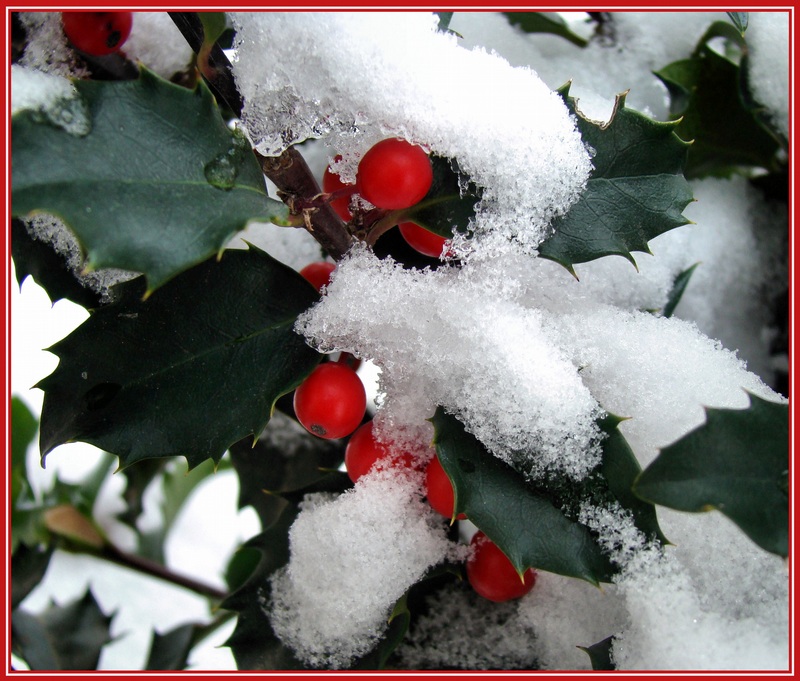
UNDER THE HOLLY


Grab some cookies and some of this wonderful coffee and enjoy a Christmas story that tugs on your heart.


Gingerbread Latte
2 fluid ounces espresso coffee
2 tablespoons gingerbread flavored syrup
1/2-cup milk, steamed
1/8 cup whipped cream1 pinch ground nutmeg
1 pinch ground cinnamon
1/2-teaspoon vanilla powder

Directions
In a coffee mug, combine espresso coffee with flavored syrup. Pour in steamed milk. Top with whipped cream, and sprinkle with nutmeg, cinnamon, and vanilla powder.


~Story by Ken Coffman~
Owner: Stairway Press


Tom carefully parked the old Toyota on the crest of a hill. The starter did not work, so he needed the incline to compression-start the car. The sky was obscured by woolen blanket of clouds that seemed to suck color from the world. He rested his head on the steering wheel for a moment and gathered the willpower to move. Tommy was with the next door neighbor, Claire Jensen, who watched daytime dramas with the TV volume turned up so high that Tom could hear the tinny chatter in his car as the cooling engine ticked. With the steering wheel imprinted on his forehead, he slowly raised his hand and wiggled his fingers. He was not paralyzed, but it was as if the world pressed on him with cruel force. Cold wind slipped through loose window seals. Snow looked imminent. He needed to go.


Standing on Claire's sagging porch, he lifted the knocker and let it fall. It snapped like a toy pistol. Tommy's feet clomped on the floorboards; miniature thunder as he ran to the door.

"Daddy," he shouted. "Where have you been? I've been waiting. It's Christmas."

Tom was proud of Tommy's vocabulary. He was not quite four, so his enunciation was sloppy, but his thinking was clear. Tom gathered him in his arms squeezed.

"No, Christmas is tomorrow."

"No, Christmas is today, right now, they said so on TV," Tommy explained patiently as if that settled the matter.

"Okay, maybe I'm wrong," Tom said.

Dressed in several layers of bathrobes, Claire muted the TV and poked her head around the corner.

"Merry Christmas, Tom," she said.

"Back at you, Mrs. Jensen. I hope Tommy was no trouble."

"Never. I wish my kid was as good as him Tommy's an angel. We were watching the Christmas special As the World Turns. It's a rerun of old highlights, but it's still pretty good. Eddie didn't find out Deena was his mother until after Margo killed her."

"That's nice, Mrs. Jensen."

"A man in a uniform walked around your house. I think they turned the power back on."

"Why would they do that?"

"I don't know, but look."

Tom peered through lace curtains at his little house. It was true, some of the lights glowed.

"I didn't pay the bill," he mused.

"If it's still cold over there, come back. At five o'clock I'm going to have a nip of Smirnoff from the freezer. You can share a toot."

Tom knew that a nip meant a fifth, but he did not begrudge her habit; she was always sober during the day. He knew she didn't want to share her bottle but he appreciated her asking.

"We have something to do, but we might stop by later."

"You do that, Tom."

She waggled her fingers at Tommy and he returned the gesture. Outside, Tom strapped Tommy in the car and settled himself in the driver's seat.

"Are you ready?"

Tommy nodded solemnly and took a deep breath. He was convinced the car would only start if he held his breath. Tom released the parking brake and popped the clutch as the car picked up speed. It rumbled to life with a puff of blue smoke.

"See, Daddy, it works," Tommy said.

"It always does," Tom replied.

They turned at the corner.

"Where are we going? It's Christmas, you know."

"So I've heard. We'll go see Mommy."

"Oh." Tommy watched the scenery flowing outside his window for a minute. "What's a pregnancy test? I asked Mrs. Jensen, but she said I should ask you."

"Is that something you heard on the TV?"

Tommy nodded vigorously. "Yes," he said.

"We'll talk about that later, okay?"

"Does later mean never, Daddy?"

"You're a funny little guy. I don't know what I'd do without you."


The cemetery was on a hillside. Cedarville, in all of its small-town patchwork glory, spread out on the valley floor. The river weaved through trees and glistened in the flat winter light. Tommy fumbled with his seatbelt and door and then ran to his mother's grave site. Towels, decorated with sprigs of holly and evergreen fronds, were spread on the damp grass.

"Mama didn't forget Christmas," he shouted. "Hurry up."

Tom handed him a pair of woolen socks.

"Put these on, it's cold."


"Wally has mittens, they're really cool. I mean they're warm, but they're cool."

"We don't have any mittens, so you have to wear socks. They're warm, put them on."

"No one else wears socks on their hands," Tommy complained, but he pulled them on.

Tom stood for a minute reading the inscription. Rebecca Thomas, Beloved Wife and Mother, Taken Too Soon. 1982-2007. RIP

He wanted to scream and tear out his hair and rip the stone from the ground and throw it down the hill. Instead, he pulled a Thermos from a paper bag.

"Give your mom a kiss and have some chocolate," he said.

Tommy kissed the cold granite and settled on his haunches on the picnic towels. He sipped the hot chocolate and studied his father.

"Are you alright, Daddy?"

With his thumb, Tom worked on a smudge of chocolate on Tommy's cheek.

"Sometimes," he replied.

A man, dressed in a long gray overcoat, picked his way from the parking lot. It was George Wilson, Rebecca's boss.

"I took a chance on finding you here. Hello Tommy."

"Hello, Mr. Wilson," Tommy replied.

"We took a collection around the office and got your power turned back on."

With creaking knees, Tom stood, and then took George's arm and led him a few steps away.

"We don't need charity," he said.

"You can call them and tell them to turn it off again."

Tom took a deep breath.

"I'm sorry, I know you mean well..."

"Rebecca wouldn't want you two to freeze to death on Christmas. Let us do this small thing. Also, the man from the insurance company came by again."

"I told you, I don't want their money. It has Rebecca's blood on it."

"You're so melodramatic. He gave me papers. The money will go into a trust for Tommy so he can go to college when he's 18. Rebecca would not want you to be stupid."

"I'll get a job after the first of the year."

"Don't be a fool. You don't want the insurance money, that's fine, but sign the damn papers for Tommy, okay? The man from the insurance company is driving me crazy."

"Okay. I don't have a pen."

George proffered a silver pen and Tom scribbled on the paperwork at all the places marked with red X's.

"Another thing is, you need to turn on your cell phone. That agent lady from New York has been trying to get in touch with you. I don't understand all this stuff, but she says there are two bidders and you need to decide if you'll sign a two-book deal. That's good, right? She says it's a fair amount of money."

"I can't think of that stuff right now. My wife is dead."

"I know all about the horrible accident, Tom," George said gently. "I also know she supported you for three years so you could write that book. I told the agent I'd let you know. Now you know and I'm done. You take care, okay, Tom?"

"Yeah," Tom said.

He watched George navigate his way back to the parking lot for a moment before turning back to Tommy.

The picnic bag held a partial package of Oreos. He held out a handful for Tommy who took them in his ensocked hands.

"I haven't had dinner yet," Tommy said.

"On Christmas, you can have cookies for dinner."

"I like Christmas," Tommy mumbled through a mouthful. "There's no money for presents, is there? We're flat."

"That's right, Tommy, we're flat busted." A sprinkle of snowflakes drifted from the woolen sky. "But, maybe your mama sent you something..."

"What?" Tommy jumped up and ran around the tombstone. "I don't see anything."

"Maybe she left it under the holly."

The holly flew as Tommy tossed off the sprigs. He raised a package wrapped in red and green paper.

"Look, you're right. Mama didn't forget about me."

"No Tommy, your mom will never forget about you."

Tommy jumped on his dad's lap clutching his present tightly in his chubby arms.

"Go ahead and open it."

"Can I wait a while, Daddy? I don't care what it is."

"Wait as long as you like," Tom said.

The snow, drifting from the sky like apple blossoms, slowly turned the ground white. They stayed as long as they could stand the cold and then headed for home.

Monday, August 13, 2012

MONDAY MUSING: SHOW UP


 I’m still fighting a stomach bug so I am reprising an article written for me, a couple years ago, by a friend of mine, Ken Coffman.  I have a lot of respect for Ken and what he’s accomplished. Ken is both author and a publisher. I love his attitude when it comes to going for what he wants. I really liked the straight foreword tone of this article. I thought you might enjoy reading it, too.


80% of success is showing up.
- Woody Allen


What is the right percentage? 80% of success is showing up? I’ve heard 90%, 95%, and even 100%. Let’s not quibble, my friends. Some high percentage of success comes from showing up. But, what the hell does that mean?

I feel like I understand the concept and it doesn’t mean success is easy. Showing up sounds easy, so what’s going on? Let’s suppose you’re sitting in a room with one hundred other people. If you have a question, the physical effort of raising your hand is nothing. You lift that heavy hand hundreds of times a day. But the courage to take the chance, to draw attention to yourself, to risk asking the stupidest question ever asked…that takes courage. Grit. Guts. In this case you gotta show up by raising that heavy hand.

Patrick Moraz today From his website
Let me illustrate with an example from my life. Every few years when I can afford it and the mood strikes me, I will act as concert promoter. A while back, I booked a show with Patrick Moraz. Patrick is a world-renowned keyboardist and pianist who played with [British Rock Bands]Yes (1974-1976) and The Moody Blues (1978-1991). Truly, he is as close to a modern incarnation of Mozart that we will see in our lifetime. That sounds over-the-top and ludicrous, doesn’t it? But, check it out. You’ll see.


For an opening act, I decided to book a friend, Eric Dahl. Eric is a talented songwriter/storyteller, but I remember the day he told me he didn’t know how to play the guitar. I’d seen him perform and loved his songs…how could it be that he ‘knows not’ how to play? As it turns out, a guitar-playing friend tunes his acoustic guitar to an open chord and all Eric has to do is move his thumb and index finger up and down the neck to play simple patterns. As an aside, this is the way Glen Wilson (from my novel series, the continuing adventures of Glen Wilson, which starts with Steel Waters) also plays the guitar. This is in no way coincidental, but never mind that.

The concert was fun and the audience ate it up. Then, at the end, for an encore, a group of people wanted to hear Eric playing with Patrick. My heart sank. This would be a disaster… We can’t combine one of the premier pianists of the world with a fellow who does not know how to play the guitar. Sensing a meltdown, I sank into my seat and tried to disappear.

Here’s what happened. Eric got on stage, grinned at the crowd and started playing and singing a simple, funky bluesy pattern. Genius that he is, Patrick joined in and played wild, creative and amazing accompaniment. It was great. Perfect. Beautiful. And taught me a valuable lesson. I have the recording. It’s cool.

The life lesson?


Be bold. Take the lead. Show up.

What does this mean to my fellow writers? We’ll have setbacks. The blank page will sit on our screen and mock us. We’ll get a bad review. Another rejection letter. We’ll lose a contest. It can be overwhelming, paralyzing and depressing.

That’s life.

What should we do? Work! Perfect your skill at creating characters, designing a story arc and executing your ideas with good grammar, vocabulary and syntax. No matter where you started and no matter where you are today, you can get better and inch closer to your goal. Step-by-step. Day-by-day.

And that’s what I’m doing. Thanks Eric.
~*~*~*~


Ken Coffman is the author of Fairhaven, Steel Waters, Hartz String Theory and other mad novels available from Amazon.com and other online bookstores. He wrote a popular technical book called Real World FPGA Design with Verilog published by Pearson-Prentice Hall.

He is a Field Applications Engineer and Member of the Technical Staff at Fairchild Semiconductor.He is the coauthor of six patents, a member of the standards association of the Institute of Electrical and Electronics Engineers, 

Ken is the publisher of Stairway Press, publishing and marketing literary books in various genres (including science, science fiction, short stories, political essays, literary thrillers and adventures). 

Ken is a guitar player. He and his wife live in the Seattle area.  He plays golf exactly the way his boss wants him to: very poorly.

Wednesday, August 18, 2010

Interview With Dale Cozort

Two copies of Exchange will be awarded to two commenters 


My guest today is Sci-fi debut author, Dale Cozort. Dale and I met through a Gather writing contest and I fell in love with his writing. I’m a big Sci-fi fan and have always been and was thrilled when Dale got a contract. Dale is funny, smart as a whip, and I swear he had to have touched the Blarney Stone, because he tells a great story. 


Tell me a bit about Dale Cozort? By profession you’re a teacher?

Yep. I teach computer skills and do hardware and software support.

Oh, I love computer geeks! I learn so much from them. What do you like to do for fun and relaxation?

In the winter I read quite a bit—mostly science fiction and mysteries, and spend too much time watching TV. In the summer I love long bike rides. We have a couple of nature trails and pretty much every day we can see chipmunks, squirrels and rabbits along the trail. We see deer and raccoons a couple of times a year. It’s nice.

You’ve been writing for some years, how long have you had the goal to be published?

I got serious about it sixteen years ago. I took a couple detours of several months to a year or two along the way, most importantly when I was helping my aunt with a lawsuit she got involved in.

I understand Exchange was entered in a writing contest, correct? How did you do in the contest?

Yep. Gather’s second First Chapters contest. Exchange made the semifinals—in the top twenty-five out of over three hundred. Unofficially it ended up in tenth place.

I know I was not only impressed with the quality of your story but where you ended up. Gather’s First chapters’ contests were very tough to brutal, in my opinion.


What lessons did you learn from it?

I learned a lot about how difficult it is to stand out from a large field. The structure of the Gather contests really gave you a feel for what editors and agents go through as they try to find marketable writing in a sea of writing that ranges from awful to just not quite good enough.


I have to agree. It certainly gave me more of an appreciation for agents and editors too. There were some very good entries, but after reading them all, there were more entries that ranged from god awful to, as you put it, not quite good enough.

Do you feel writing contests benefit writers?

It depends on how they’re structured. If they give good and meaningful feedback, then yes, they can be great. If not, they’re just another slushpile—not necessarily bad, just no real advantage.

Good point. How have you handled discouragement that comes with submitting and getting rejections?

A long walk or a bike ride usually helps. A good book can help. Sometimes I write. Some of the edgiest writing can flow when you’re discouraged, angry, experiencing any kind of strong emotion.

How would you classify Exchange? I know it has, as all good books and movies, an element of romance but is this Sci-fi?

It’s definitely Science Fiction, but it explores relationships more than people usually expect from science fiction. If you go into it as a person who only reads Romance, it’ll be an okay read, but not a great one for you. If you like Science Fiction and Mysteries and you also like stories where relationships are important, then you’re the core of the target audience.

What drew you to this genre?

I’ve been reading science fiction and mysteries since I was in middle school. I like exploring new worlds and trying to figure them out. I love what-ifs.

Give me a glimpse of this world you’ve created?

I see it as being both beautiful and incredibly tough. The size and variety of animals makes the North America of Exchange feel more like Africa before it was tamed down than anything else, though in some ways it is recognizably North America.

“Before it was tamed down?” So, are you talking about prehistoric creatures too?

The big, fierce animals that didn’t survive past the ice ages in our world are still around in large numbers, along with some exotic ones like the swarms of fast-running little monkeys. Sharon, the heroine saves a young monkey from a flood, and when he attaches himself to her she gets a lesson on how different the new world she has entered is.

The monkey showed no sign of aggression. It also showed no sign of going away. It foraged for insects and bats in the grass near Sharon, snatching them and popping them in its mouth so quickly that the motion blurred. Sharon thought about trying to chase it away, but decided that might precipitate whatever danger the monkey posed. Instead she found a couple of rocks and tried to chip a point on one.


Within a short time, Sharon’s hands were cramping and bruised from her. She noticed the monkey watching her intently and held up the rocks. “Don’t you wish you could do this? This is what separates us from you.”


The monkey strolled over and picked up a couple of the larger chips that she had flaked off. It chipped at one of them for a couple of minutes with quick, practiced motions, then moved back, carrying a sharp-edged chip in an odd grip between its thumb and the top of the next finger.
Sharon stared at the monkey and said in a subdued voice, “Well, that’s supposed to be one of the things that separates you from us.” The monkey chipped an edge onto a larger rock and handed it to her.

I like Sharon; she’s got a wry sense of humor and she’s emotionally strong and not afraid to tackle whatever needs to be done. What do you admire about Sharon?

She just keeps going. No matter how hopeless the situation seems, she just keeps working away at it until she finds a way of going on.

Your hero, Leo, is a bit of a rogue, a good dose of mystique, some dangerous edges and I think he’s very interesting and complex. Leo, in my opinion, is rather hot with a good amount of sex appeal, as many dangerous men do. What do you like about him?

Leo is a mystery. He has layers of secrets, and as you unravel one you become aware of a bunch more. At the same time you get the feeling that it’s worth the time of finding out what he’s really about.

Do you have a favorite scene in the book?

My first thought is, sure that’s easy, but it doesn’t turn out to be.

I don’t do easy, Dale, lol! That’s what you call a deceptively simple question. So what was your second thought?

I had a lot of fun writing the scenes between Sharon and Leo, as she tries to figure out who he is and what his motives are.

I love their relationship. Would you mind sharing one with us?

One of the earlier ones without spoilers:


Sharon heard a fragment of the reply, “…don’t care who he is. I haven’t had a woman in years.” She eased the pistol from her belt.

Not a man. Just a target.

The balding convict spurred his horse and approached at a gallop. He raised a stone-tipped spear. The others eyed Leo and stayed put. Sharon raised the pistol, thumbed the hammer back, and aimed at the center of the man’s chest.


“I’ll shoot.”


He grinned and kept coming. Sharon hesitated. The sight wavered.


No choice. Do it.


She fired. The pistol jerked against her hand and the bullet’s crack echoed in the still landscape. Above his paunchy stomach, a red stain blossomed on the man’s tattered shirt. The spear dropped at Sharon’s feet. The convict fell with one foot still in the stirrup, spooking his horse, and the animal ran off, dragging his unconscious rider. Sharon caught a glimpse of a rifle tattoo on the convict’s flailing forearm—AK. She shuddered when his head bounced off a rock outcropping and turned away, only to find the convicts’ semicircle had dissolved into chaos. Another convict fell off his bucking horse, which kicked him in the chest with both hind feet when he started to get up. The man flew backward and twitched in the grass.


When the remaining convicts got their horses under control, the man with the pockmarked face spoke to Leo.


“Don’t imagine you’d sell the bitch?”


“You can’t afford her,” Leo said.


Sharon stared at her companion. A strange, eager expression faded from his face as she watched.


“Let us just get what’s left of Joe and catch the horse that ran off. Then we’ll be on our way.”


“Good idea.”


While Sharon and Leo watched, the convicts hauled up the bodies and arranged them on horses. They rode off, several looking over shoulders to stare or gesture at Sharon and Leo.


Sharon kept her pistol pointed warily toward them until they disappeared over a hill.


“They didn’t seem like the kind of men to give up that easily,” she said. “He was an AK. I think they all were.”


“Aryan Kings? Probably. They’re in most prisons and a lot of cities in the Midwest.”


“Not people to run away from a fight.”


Leo grinned. “Maybe you scared them off. Only three of them had guns and who knows if those guns had ammunition. Could be a lot of things.”


“I don’t think so,” Sharon said. “I think you scared them.”


Leo smiled. “You had the gun.”


“I had the gun but they weren’t afraid of me. Who are you?”
You can read the official exerpt and Blurb


What’s coming next from the pen of Dale Cozort?

My next priority is getting Char ready to go out the door.

Yeah! Oh, I loved what I’ve read of Char, as you well know. Can you tell us a bit about this one?

Char is a unique mix of science fiction and police procedural. An apparent cavewoman shows up in rural Wisconsin in the middle of a paintball game. One of the paintballers dies and a very smart female sheriff ends up trying to untangle a mix of clues which includes bare footprints that don’t seem quite human and a trail that comes out of the center of a mudhole with no trail going into it. The sheriff is a wonderful character, with a devastating dry wit and powerful detecting ability. I would love to see people get to know her, along with Char, the cavewoman.

After that I want to finish my work in progress, which involves the modern United States and the US of 1953 coming in contact with each other—and not particularly liking each other.


I’m looking forward to both. I love your premises, the ‘what-ifs’ and the blend of old world and new.


Dale, it’s been a pleasure to talk with you. I always appreciate authors taking time out of their busy schedules to answer questions.


Folks, if you haven’t read Exchange, you’re in for a treat. It’s a fun story that grabs you attention right from the beginning and doesn’t let you go. It has a cast of strong and complex characters, an intriguing storyline with well-crafted suspense and adventure, with a nice touch of romance.  Buy:  Amazon  Stairway Press  IndieBound

####

Dale is a computer teacher, nature lover, and an avid amateur historian. He has worked as a computer person for the Illinois Bureau of the Budget and DeKalb Genetics and as an underwriter for MetLife.


Dale loves science fiction and mysteries. He lives with his wife, a teenage daughter, three cats, two nervous birds, and a couple of thousand books in a house built in 1864. For many years his home, located in a university town sixty miles west of Chicago, was also a foster home for stray or abandoned Samoyeds and Siberian Huskies.

Dale has written four novels, numerous short stories and novellas, and a number of essays on alternate history and political/military events. For the last twelve years he has written and edited an on-line alternate history newsletter, with issues appearing four to six times per year. Around a dozen of Dale’s articles on political/military events have been published by the news site Strategypage.com. Dale was one of five finalists (out of 250+ entries) in last year’s TruTv Search for the Next Great Crime Writer contest.
Blog  Gather Home Page